Dead end
Rafeeq counted to ten with a racing heart as he waited for the curfew siren to end. The army would soon march past shuttered homes, the empty streets echoing to their footsteps. Barricaded trucks would rumble past, next. They were ordered to shoot at sight. Fear and the distant clamour of angry mobs hung heavily in the air.
Rafeeq glanced at his bags and mason’s toolkit lined by the door. They were strapped and labeled for Dubai, the city of black gold. If he didn’t reach the airport quickly, he’d be finished. But he’d be shot if he stepped outside. Maybe that would be better than giving in to Shakeel’s demands, he thought whimsically; he was finished anyway.
Shakeel, once his childhood friend. Now Shakeel, the sharpshooter, the fixer, with money to throw around. Shakeel had jeered, "Cowards run away! Real men grab what they want”. Shakeel, the nasty businessman, who’d bartered over the loan for his airfare, “ If you can’t pay us back, join us or we’ll fix you”.
Yet again, a useless riot, he thought, angrily. Why’d this have to happen today, why not next week? Fate was against him, it was all his cursed luck. If only he’d gotten away a day earlier, he thought, despairing. Some uproar over a temple or a mosque from two hundred years ago, in some godforsaken town. Fanatic mobs armed with spears and knives roamed the streets, so they said in the mosque. Fight the bloodthirsty devil, they’d said, wild-eyed, but it wasn’t his battle. He’d just wanted to run.
Masons like him were in demand on large construction projects in Dubai. He’d never wanted to go to that scorching land, not at first. But his father’s hospitalization and funeral debts had overwhelmed him. Dubai’s dirhams would get multiplied many times over in Indian currency. Inshallah, at least it would be honest work, imaan. But maybe God wished otherwise.
Maybe Shakeel was right.
(cue- Oh God! Why me? 317 words)
Tuesday, February 27, 2007

Tuesday, February 13, 2007
Go west
In the dark, Amrita saw strands of bright lights, maybe a party was in progress on the lawns. She identified laughter, cutlery and tinkling glass, high-pitched voices and an insistent, insect-like buzz somewhere in the background. No, if you heard closely enough it sounded like a scratchy music tape. Amrita tried to unscramble the words, past the whirr and buzz. “ Oh! Its ‘Go west’ ”, she said, and hummed along.
The next instant she found herself in a vast regal building with impressive arches, vaulted ceilings and polished wooden floors. Colorful paintings lined the walls, and tasseled silk curtains framed large windows. A group of people seemed to be walking around, looking at the pictures, perhaps they were tourists. Amrita was quite surprised to be a part of that group, for it seemed a rather familiar place. A song played somewhere in the distance. Although she strained to hear the words, they were too faint.
Just as suddenly, she found herself on a rickety bus that was climbing up a steep mountain incline. The bus was late, she had a plane to catch, perhaps they’d taken longer than scheduled at the palace. Amrita panicked as she realised how far away the airport was. The bus negotiated a steep curve only to stall before a river in spate. She walked to the rusty bridge, the gushing waters seem to be echoing some words. Amrita was puzzled, she just couldn’t place the words. But if she didn’t find a way out quickly, she’d be finished; it was absolutely critical that she move. Just then, a gaily-decorated camel cart appeared. Amrita laughed at the sight, a camel cart, festooned with bells and garlands, at the boarding gate of a plane. She knew she’d be all right, now.
The alarm trilled loudly. Amrita yawned and shook herself awake, reaching to pick up an US university admission form from her bedside table. “ Go west. Life is peaceful there, go west in the open air” as the song went. She wasn’t confused any longer; her job in India could wait.
(cue- dreaming/imagining, 348 words)
In the dark, Amrita saw strands of bright lights, maybe a party was in progress on the lawns. She identified laughter, cutlery and tinkling glass, high-pitched voices and an insistent, insect-like buzz somewhere in the background. No, if you heard closely enough it sounded like a scratchy music tape. Amrita tried to unscramble the words, past the whirr and buzz. “ Oh! Its ‘Go west’ ”, she said, and hummed along.
The next instant she found herself in a vast regal building with impressive arches, vaulted ceilings and polished wooden floors. Colorful paintings lined the walls, and tasseled silk curtains framed large windows. A group of people seemed to be walking around, looking at the pictures, perhaps they were tourists. Amrita was quite surprised to be a part of that group, for it seemed a rather familiar place. A song played somewhere in the distance. Although she strained to hear the words, they were too faint.
Just as suddenly, she found herself on a rickety bus that was climbing up a steep mountain incline. The bus was late, she had a plane to catch, perhaps they’d taken longer than scheduled at the palace. Amrita panicked as she realised how far away the airport was. The bus negotiated a steep curve only to stall before a river in spate. She walked to the rusty bridge, the gushing waters seem to be echoing some words. Amrita was puzzled, she just couldn’t place the words. But if she didn’t find a way out quickly, she’d be finished; it was absolutely critical that she move. Just then, a gaily-decorated camel cart appeared. Amrita laughed at the sight, a camel cart, festooned with bells and garlands, at the boarding gate of a plane. She knew she’d be all right, now.
The alarm trilled loudly. Amrita yawned and shook herself awake, reaching to pick up an US university admission form from her bedside table. “ Go west. Life is peaceful there, go west in the open air” as the song went. She wasn’t confused any longer; her job in India could wait.
(cue- dreaming/imagining, 348 words)
Saturday, February 03, 2007
Torn
Mehjabeen sighed as she shut the book that she was reading. In the late dusk a few straggling birds winged their way home. Soon, stars would hold up a velvet sky, and the muezzin would call out from the minaret, age-old words reminding the faithful.
There was a James in the story that she’d just read, a representative of Her Majesty the Queen at the Nizam’s court in Hyderabad. That James had lived happily ever after, even though he wed his beloved, ignoring bloodlines, cultures and lifestyles.
Let’s go away, her James had said. His short assignment almost over in the IT company where she worked, he’d soon return to his life. A different life.
The book made it sound so simple. Perhaps 18th century India was different, she thought wistfully. Perhaps she should just toss a coin. Anything would be better than the shroud of silence she’d crept behind. “Is something the matter, beta?” her mother had asked.
Would there be a scandal? Of course there’d be a scandal! Wasn’t there a scandal all those centuries ago? Gossip and fierce debate in the bazaar, skirmishes in the winding bylanes, a furtive investigation by the authorities, a near uprising.
Couldn’t be as bad. Perhaps they’d ostracize Abba and Ammijaan. Or completely cut off relations, cold shoulder them. Maybe stop all business dealings, she thought, with a strange feeling in the pit of her stomach. Stone and ransack the house? Honor killings? Not likely, this was a democracy, right?
Perhaps no one would drop by for a cup of tea or invite them to weddings and functions anymore. Her aunts would nag, sermonize and pick on her mother’s modern ways. No purdah! And learning beyond class five! Computer science! What need did a girl have of such frippery? It just gave ideas and then see what happens! Walking about shamelessly, unveiled and unescorted! Tramping off with a foreigner no less, some James.
Her James. He’d soon return to New York. “Come away!” he’d said, laughing; that telltale gleam in his eye showing how well he understood her. It was uncanny how they could read each other’s minds, with not a word said.
She dialed his number on her cell. She’d have to decide quickly.
(this was a writing sub, cue- Torn)
Mehjabeen sighed as she shut the book that she was reading. In the late dusk a few straggling birds winged their way home. Soon, stars would hold up a velvet sky, and the muezzin would call out from the minaret, age-old words reminding the faithful.
There was a James in the story that she’d just read, a representative of Her Majesty the Queen at the Nizam’s court in Hyderabad. That James had lived happily ever after, even though he wed his beloved, ignoring bloodlines, cultures and lifestyles.
Let’s go away, her James had said. His short assignment almost over in the IT company where she worked, he’d soon return to his life. A different life.
The book made it sound so simple. Perhaps 18th century India was different, she thought wistfully. Perhaps she should just toss a coin. Anything would be better than the shroud of silence she’d crept behind. “Is something the matter, beta?” her mother had asked.
Would there be a scandal? Of course there’d be a scandal! Wasn’t there a scandal all those centuries ago? Gossip and fierce debate in the bazaar, skirmishes in the winding bylanes, a furtive investigation by the authorities, a near uprising.
Couldn’t be as bad. Perhaps they’d ostracize Abba and Ammijaan. Or completely cut off relations, cold shoulder them. Maybe stop all business dealings, she thought, with a strange feeling in the pit of her stomach. Stone and ransack the house? Honor killings? Not likely, this was a democracy, right?
Perhaps no one would drop by for a cup of tea or invite them to weddings and functions anymore. Her aunts would nag, sermonize and pick on her mother’s modern ways. No purdah! And learning beyond class five! Computer science! What need did a girl have of such frippery? It just gave ideas and then see what happens! Walking about shamelessly, unveiled and unescorted! Tramping off with a foreigner no less, some James.
Her James. He’d soon return to New York. “Come away!” he’d said, laughing; that telltale gleam in his eye showing how well he understood her. It was uncanny how they could read each other’s minds, with not a word said.
She dialed his number on her cell. She’d have to decide quickly.
(this was a writing sub, cue- Torn)
Wednesday, January 03, 2007
The Promise
The first drops of rain cooled dry, parched earth that had baked to the mid-forties over the last few months. The air felt magically sharp. The just-about-wet dust was fragrant with that gentle smell called saundhi in the local language.
Neha stretched her hand to let a few drops fall on her palm and trickle down her long fingers. “O’ my great artist!”, Nikhil would’ve teased her. But then, the first shower was magical. Wasn’t that how Nikhil first met her, as she stood all alone in a rain-swept gallery at college? “Are you a poet?” he’d abruptly asked, interrupting her reverie.
They’d a whirlwind courtship. Days seemed to have passed in a blur of laughter, bunked classes, shared coffees, teasing and holding hands; days of gentle rain. They were engaged after monsoon, and married by the year-end. In what seemed a short while, they’d graduated, found jobs, set up home, occasionally quarrelling over things like the color of living room curtains.
Nikhil’s work required a great deal of travel to the cities close by, but he’d make sure to drive back home no matter how late in the night. After one such trip Neha stayed up all night only to hear news of the headlong crash, “nobody’s fault, just bad judgment, fate”. A year after she’d begun to recover, she’d moved to a new city to begin anew.
She forced herself back to the present. “It doesn’t rain in quite the same way in Mumbai”, she murmured. That was right. There, the heavens opened out with all their might and beat down with furious, businesslike intent, much like the city. No one stood a while to smell the first rain.
This trip, she’d picked her treasures. Now she had no reason to return.
( for sub, 293 words)
The first drops of rain cooled dry, parched earth that had baked to the mid-forties over the last few months. The air felt magically sharp. The just-about-wet dust was fragrant with that gentle smell called saundhi in the local language.
Neha stretched her hand to let a few drops fall on her palm and trickle down her long fingers. “O’ my great artist!”, Nikhil would’ve teased her. But then, the first shower was magical. Wasn’t that how Nikhil first met her, as she stood all alone in a rain-swept gallery at college? “Are you a poet?” he’d abruptly asked, interrupting her reverie.
They’d a whirlwind courtship. Days seemed to have passed in a blur of laughter, bunked classes, shared coffees, teasing and holding hands; days of gentle rain. They were engaged after monsoon, and married by the year-end. In what seemed a short while, they’d graduated, found jobs, set up home, occasionally quarrelling over things like the color of living room curtains.
Nikhil’s work required a great deal of travel to the cities close by, but he’d make sure to drive back home no matter how late in the night. After one such trip Neha stayed up all night only to hear news of the headlong crash, “nobody’s fault, just bad judgment, fate”. A year after she’d begun to recover, she’d moved to a new city to begin anew.
She forced herself back to the present. “It doesn’t rain in quite the same way in Mumbai”, she murmured. That was right. There, the heavens opened out with all their might and beat down with furious, businesslike intent, much like the city. No one stood a while to smell the first rain.
This trip, she’d picked her treasures. Now she had no reason to return.
( for sub, 293 words)
Tuesday, November 21, 2006
Tangy
As a rickshaw and a few cars whizzed by forming a few dust clouds, the man at the counter deftly served Maya a succulent panipuri in the steel bowl she reverently held out. Under the gleaming streetlight, each crisp spherical wheat cover almost crumpled to sogginess with the sloshing sweet and tangy tamarind liquid it briefly held.
“Plop”, he went, dunking a tiny golden orb laced with bits of potato and pea filling into a large metal pot holding the chilled spicy liquid. A puri then quickly found its way into each outstretched bowl by turns. A semicircle of strangers bound for that moment by a spicy kinship, shared intent. No one looked at him, or each other. No one talked. Almost like a prayer, this act of ensuring that the puri reached their mouths almost intact. An act of sublime concentration, finishing each puri well in time before the next serving.
In a flash, the tangy juice, the blend of green- red chillies and the just about dissolving wheat cover worked their magic. Opening up long forgotten nerve endings, setting the brain afire, as the first of tears flowed. In that moment, nothing else mattered. Not what he said – or didn’t. “I don’t particularly care for street food,” he’d said, disdainfully. “Oh, but I do,” she’d said, finally walking away.
(222 words for sub)
As a rickshaw and a few cars whizzed by forming a few dust clouds, the man at the counter deftly served Maya a succulent panipuri in the steel bowl she reverently held out. Under the gleaming streetlight, each crisp spherical wheat cover almost crumpled to sogginess with the sloshing sweet and tangy tamarind liquid it briefly held.
“Plop”, he went, dunking a tiny golden orb laced with bits of potato and pea filling into a large metal pot holding the chilled spicy liquid. A puri then quickly found its way into each outstretched bowl by turns. A semicircle of strangers bound for that moment by a spicy kinship, shared intent. No one looked at him, or each other. No one talked. Almost like a prayer, this act of ensuring that the puri reached their mouths almost intact. An act of sublime concentration, finishing each puri well in time before the next serving.
In a flash, the tangy juice, the blend of green- red chillies and the just about dissolving wheat cover worked their magic. Opening up long forgotten nerve endings, setting the brain afire, as the first of tears flowed. In that moment, nothing else mattered. Not what he said – or didn’t. “I don’t particularly care for street food,” he’d said, disdainfully. “Oh, but I do,” she’d said, finally walking away.
(222 words for sub)
Monday, November 06, 2006
Technicolor, Dolby sound
In the chilly theater,Maya suppressed a knowing grin and drew her shawl closer, glancing at the row of college students seated right behind her. Fumbling, fidgeting, holding hands. Giggles and comments at star antics, a derisive hoot as the hero hurtled through a first-floor window to a shower of glass, entirely unhurt. A young college crowd not very different from the one on the screen- battle, overturn the political system, deliver vigilante justice in two hours and some. Fast paced, lovely colors. “Entirely kitsch, Maya admitted as she moved her wrist higher on the armrest, marking territory, edging closer to the wall on her right. A close shot of a red tram filled the screen, the pensive heroine seated by a window after a lovers’ tiff. The tram turned a corner, cut to a slow pan of the Victoria Memorial. Edifice in white marble, soaring fluted columns, white dome, cornices and statues of angels and gargoyles. Edifice in white marble, set in vast rolling lawns to channeled streams and a lake, a monument to British imperial might, Hail Regina! A cloud of pigeons wheeled into the sunshine, fluttering gray against quiet white.
Regal white set picture pretty against jade. Dazzling. Slightly yellow-tinted white, yet so solidly comforting. A seven-year old runs across freshly mown grass. Now I’m an aeroplane, watch me wheel, watch me dive as I zigzag this jade expanse. London bridge is falling down, husha husha, my fair lady. Shankar! Get the car around, NOW! Ayah! A glass of water! Comb my hair! Can’t you see- are you deaf or something?! School’s on! No! The white uniform with the red belt and red ribbons, white socks. Not the blue PT dress, silly! Music on Wednesday, art on Fridays, that’s the art bag, you never keep anything properly, do you? Bag flung, stomping feet. Lush green, dairy milk chocolate, the candy called witches’ hair and space to race on Sundays. In an empty home peopled with servants, sunlight filters past vast rooms. A child’s room, “my dump room”, she derisively calls it, toys books colors, higgledy-piggeldy and all over, wanting for someone to admonish. Voices from the past, can voices be sepia?
“ I’m not going back. Ever”, the heroine haltingly says to herself.
“Nor am I”, Maya admitted, arms crossed as she huddled deeper in her seat.
(394 words , for sub)
Regal white set picture pretty against jade. Dazzling. Slightly yellow-tinted white, yet so solidly comforting. A seven-year old runs across freshly mown grass. Now I’m an aeroplane, watch me wheel, watch me dive as I zigzag this jade expanse. London bridge is falling down, husha husha, my fair lady. Shankar! Get the car around, NOW! Ayah! A glass of water! Comb my hair! Can’t you see- are you deaf or something?! School’s on! No! The white uniform with the red belt and red ribbons, white socks. Not the blue PT dress, silly! Music on Wednesday, art on Fridays, that’s the art bag, you never keep anything properly, do you? Bag flung, stomping feet. Lush green, dairy milk chocolate, the candy called witches’ hair and space to race on Sundays. In an empty home peopled with servants, sunlight filters past vast rooms. A child’s room, “my dump room”, she derisively calls it, toys books colors, higgledy-piggeldy and all over, wanting for someone to admonish. Voices from the past, can voices be sepia?
“ I’m not going back. Ever”, the heroine haltingly says to herself.
“Nor am I”, Maya admitted, arms crossed as she huddled deeper in her seat.
(394 words , for sub)
Sunday, October 29, 2006
Crimson
This crisp Monday paper, the headline in font twelve
tucked by yet another Iraq story and plunging neckline
the words shriek out
a girl jumped, died.
At Grand Pardi, Kemps Corner down by Malabar hill
Where the air smells different,
Palms, brass- glass, couture, the swish of limousines
Did they stop, halt a while
a girl jumped, died
She stood a while on high parapet
beat constable and tea vendor watched aghast
their “go back! Stop now”
babbled in strange tongues’
bounced off her grief cocoon
this girl who jumped, died
did no one ever tell her
its ok, time heals; that’s life, not a cliché
she was well bred too,
conservative daughter of a honorary consul
a 23 year old MBA from UK
this girl who jumped, died
while she lay arms akimbo
seeping red patch on cobblestone gray
they went from slammed door to door
did you know her? Did she visit you?
this girl who jumped, died
“ Not us. We were fine with it”
“ it was all good, really okay”
the boy’s family much later says.
Well-lawyered lines for the papers,
to erase the crimson stain,
close yet another breaking story
this girl who jumped, died
~
Wednesday, October 18, 2006
At the book launch: The Immortal Dialogue of K. Asif's Mughal-E.-Azam
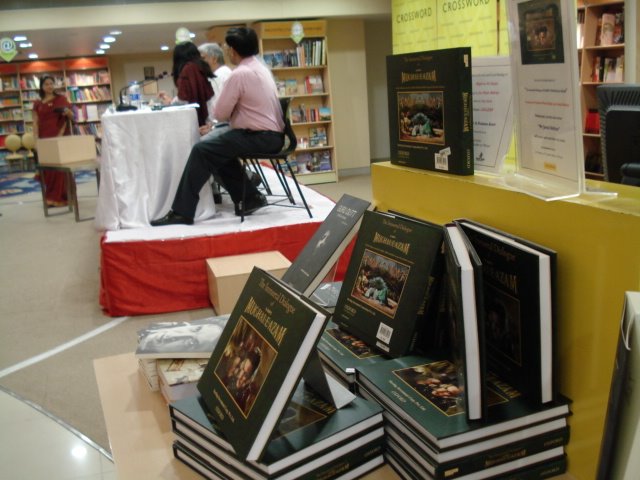
We are quite done now
with valiant Salims,
breathtaking Anarkalis
pledging troth by a million wall-mirrors
however we do have
In coffee table green, color-corrected
on foreign art paper, heidelberg bound
Columns of sparse words in four languages
For a thousand five
On sale, of course
Tears and truth by the quintal.
~
Say someday
Just by chance, ok?
dissecting a theory of the mind
or a nerve waltz through the frontal lobe
a smile caught your eye a moment longer
you watched entranced
would you please tell me
would you let me know?
Friday, October 13, 2006
tree of life
 The wall art that I fondly call “The tree of life” looks upon the world at large from its perch above the burnished dining table. As wall hangings go, this one is rather stark- a single tree outlined in white patchwork. Hand-stitched white cloth placed upon fabric of dark, lifeblood red. The cloth then perfunctorily stretched edge to edge on a firm wooden frame, the taut fabric covered over with film to keep it dust-free. A tree, standing tall and proud, quite sure of its place in the world- the tree of life. There is strength in the clean lines of the trunk and roots, a quiet dignity in lines that a child may have drawn. A crown of intertwined leaves reaches skywards, reaching out, almost breaking free and flying free of the boundaries of the frame. A canopy radiates groundwards, the rustle of delicate leaves extravagantly placed, and you can almost bring to mind the cool shade and the feel of moist ground that you could scuffle underfoot. Some branches crisscross, some stand alone. Yet each complement, an easy part of a whole that seems just right. While this art lacks the detailing, say, of a Persian engraving, in its elegance and assertion- simple, calm, straightforward - there is a clear sense of purpose, of confident growth, growth that is earned. It was a hot summer afternoon, the mercury searing at 47 plus when I was tempted into buying this from a traveling tribal craft fair. It was perhaps some fifteen years ago- yet the dry heat that seared one’s skin, the futile whirring of the pedestal fans, the idle few that ambled looking cursorily at the wares on display, the echoes along that bare whitewashed hall, colorful goods stacked haphazardly on wooden tables – I’m surprised I remember all this. I’m surprised too, at the clarity and strength that a simple tribal woman has been able to showcase - and in a few simple lines capture the sweep of a Picasso.
Subscribe to:
Posts (Atom)